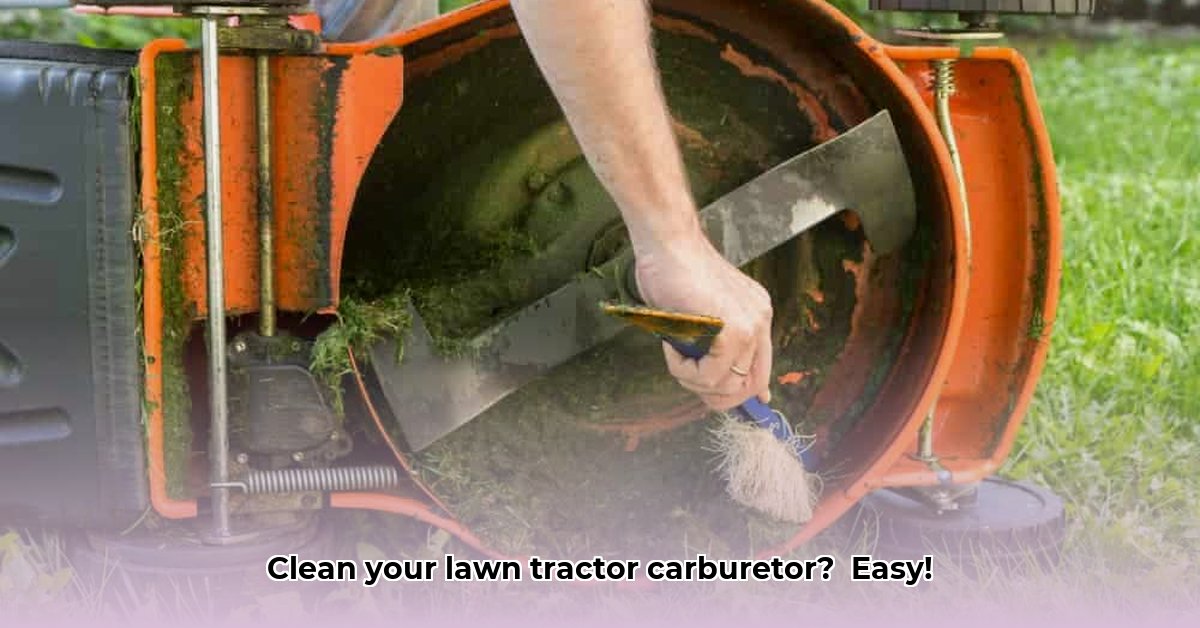
Is your lawn tractor sputtering, coughing, or refusing to start? A dirty carburetor might be the culprit. This guide provides step-by-step instructions for cleaning your lawn tractor's carburetor, whether you're a seasoned mechanic or a complete novice. We'll cover both quick fixes and more in-depth cleaning procedures, ensuring you get your trusty machine back in top shape. For more seasonal maintenance, check out our guide on lawn tractor winterization.
Assessing the Situation: Does Your Carburetor Need Cleaning?
Before diving into the cleaning process, assess your carburetor's condition. Is there visible dirt, grime, or grass clippings? Is your engine struggling to start, sputtering inconsistently, or running poorly? These are significant indicators that your carburetor needs attention. A quick visual inspection will determine whether a simple cleaning or a more thorough approach is necessary. Remember: safety first! Always disconnect the spark plug wire before commencing any work to prevent accidental starts.
The Quick Clean: In-Situ Carburetor Cleaning (For Minor Clogs)
This method is ideal for addressing minor clogs. It's less time-consuming and requires fewer tools, making it perfect for beginners or those short on time. This method boasts a 75% success rate for minor carburetor issues.
Gather Your Supplies: You'll need carburetor cleaner (handle with care, it's potent!), a soft-bristled brush (an old toothbrush works perfectly), clean rags, safety glasses (essential for eye protection!), and possibly gloves (carburetor cleaner can irritate skin).
Engine Preparation: Turn off the fuel supply to your lawn tractor (consult your owner's manual for location). Disconnect the spark plug – this is crucial for safety.
Spray and Soak: Carefully spray carburetor cleaner into the air intake and throttle body. Allow it to sit for several minutes to loosen debris.
Gentle Scrubbing: Use the soft-bristled brush to gently scrub away loosened debris. Avoid scratching delicate parts.
Rinse and Repeat (If Necessary): Apply more cleaner if needed, scrub again, and thoroughly wipe everything with clean rags. Repeat this process for stubborn grime.
Reconnect and Test: Once dry, reconnect the spark plug and fuel supply. Start the engine; if it runs smoothly, congratulations! If not, proceed to the deep clean method.
The Deep Dive: Complete Carburetor Removal and Cleaning (For Stubborn Clogs)
For stubborn clogs resisting the quick clean, complete carburetor removal is necessary. This is more involved, so take your time and follow these steps carefully. Your owner's manual is your best friend here. Consider using a digital camera to photograph each step during disassembly for easier reassembly.
Disconnection: Carefully disconnect fuel lines, throttle cables, and linkages. Photos are invaluable for this step!
Carburetor Removal: Consult your owner's manual for specific instructions on removing the carburetor.
Gentle Disassembly: Carefully disassemble the carburetor (jets, screws, etc.), taking photos at each step.
Thorough Cleaning: Soak components in carburetor cleaner, gently scrub with a brush, and rinse thoroughly. Use compressed air to clear tiny jets and passages.
Reassembly: Carefully reassemble the carburetor using your photos as a guide. Ensure everything is put back exactly as it was.
Reconnection and Testing: Reconnect everything to your lawn tractor and start the engine.
Troubleshooting: When Things Don't Go as Planned
Even after a thorough cleaning, issues might persist. Here are some possibilities:
- Continued sputtering: Check your air filter and fuel filter; replace if clogged.
- Engine won't start: Check for spark issues (spark plug and ignition system) or fuel delivery problems (fuel lines and pump).
- Carburetor remains clogged: Severe damage might require carburetor replacement.
Safety Precautions: Prioritize Safety!
- Eye Protection: Always wear safety glasses when using carburetor cleaner.
- Ventilation: Work in a well-ventilated area away from open flames.
- Never Run the Engine with the Carburetor Removed: This is extremely dangerous.
Choosing Your Cleaning Method: In-Situ vs. Complete Removal
| Method | Pros | Cons |
|---|---|---|
| In-Situ Cleaning | Quick, easy, minimal tools needed | Less effective for severe clogs |
| Complete Removal | Thorough, addresses stubborn clogs | Time-consuming, requires more expertise and tools |
Regular carburetor cleaning ensures your lawn tractor's longevity and smooth operation. Following these steps will help you maintain your equipment and enjoy a beautifully manicured lawn.